Industrial Automation Performance
Turning Automation Insight Into Industrial Performance
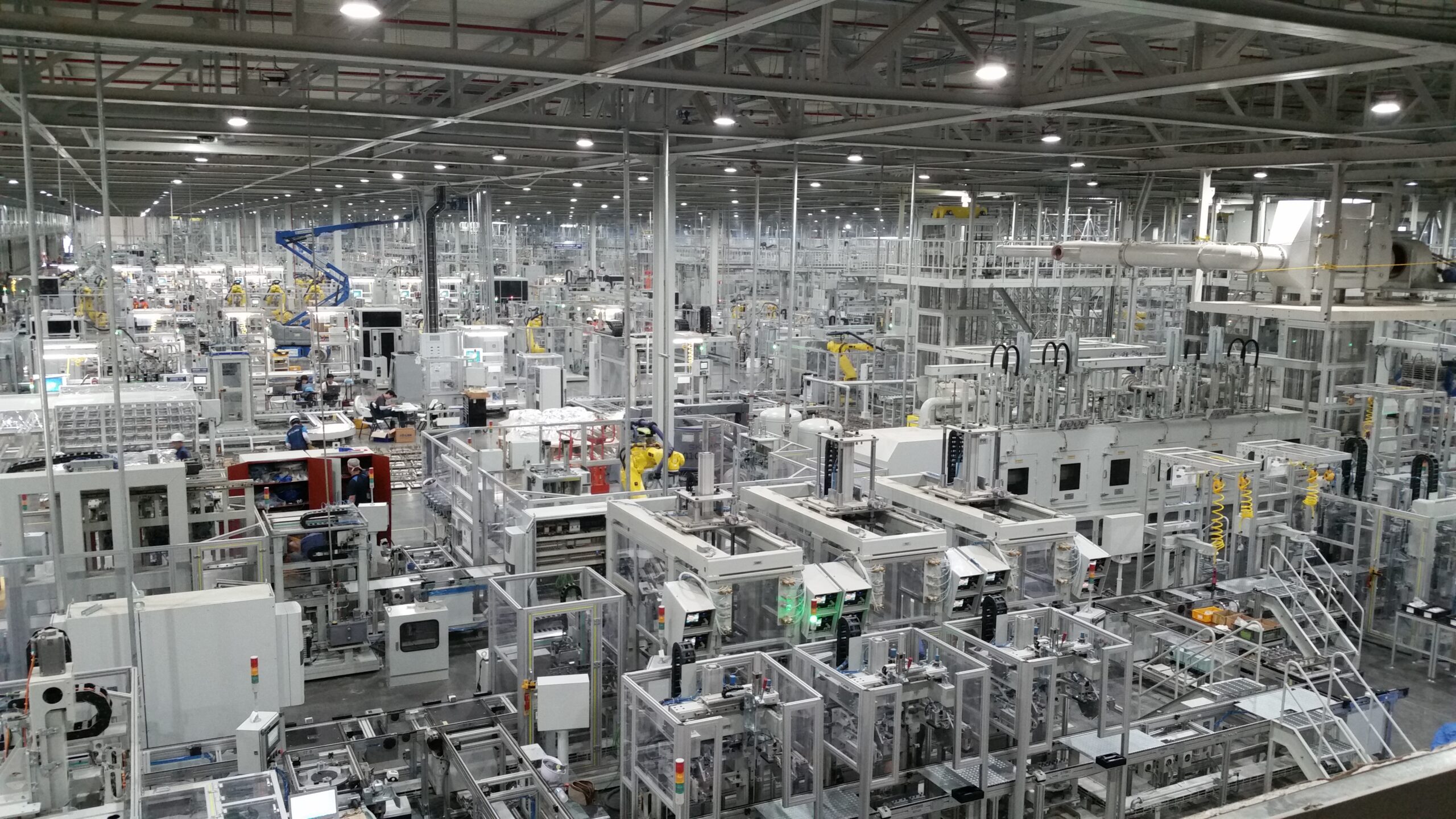
Industrial automation directly impacts availability, OEE, cycle time, maintenance response, and production stability. However, these results depend on far more than the installed technology. They depend on how control systems are monitored, how alarms are interpreted, how backups and parameters are managed, how machine conditions are tracked, and how well production and maintenance teams can diagnose problems when equipment stops or performance begins to deteriorate. In many plants, this becomes more difficult when expert technical resources are limited or when internal teams need additional support to connect machine symptoms with their root causes. EIIP’s approach is built on real shop floor experience in automation and maintenance, combining field observation, engineering diagnosis, and practical knowledge of PLCs, HMIs, CNC systems, robots, automated cells, drives, pneumatic systems, and hydraulics. EIIP does not operate as an automation vendor, machinery manufacturer, or generic technical service provider. The work of EIIP remains oriented toward operational technical support but with the depth to interface with machines, read signals, verify conditions, and support diagnostics when the situation demands it. The goal is to identify where performance is being lost and translate alarms, machine signals, technical conditions, and field evidence into practical actions that support more stable industrial performance
Industrial Areas We Support
01.
Machine Control System Performance
Diagnosing control-related losses through PLC logic, HMI signals, alarms, sensors, and field evidence.
02.
CNC Performance & Reliability
Connecting CNC alarms, parameters, PMC logic, machine conditions, and maintenance routines to production stability.
03.
Automated Cell Availability
Reducing micro-stops and availability losses across robots, gantries, transfer systems, peripherals, and recovery routines.
04.
Motion & Utility System Reliability
Linking pneumatic, hydraulic, motor, drive, pressure, and movement issues to real machine performance losses.
05.
Automation Data for Decisions
Turning machine signals, downtime, alarms, OEE signals, and maintenance data into practical operational decisions.
01
01. Machine Control Performance
Machine control performance concerns how PLCs, HMIs, sensors, alarms, interlocks, and machine sequences influence the actual availability of equipment. When a line stops, the visible symptom may be an alarm — but the root cause may be a missing signal, a faulty sensor, a valve confirmation, a wiring issue, a sequence condition, or even a mechanical problem reflected in the control system. In many plants, the difficulty is not the absence of automation. It is the limited visibility into how the control system is functioning — whether backups are current, whether alarms are meaningful, and whether the team has sufficient diagnostic support to interpret what the machine is trying to indicate. Without this, maintenance response becomes slower and interventions may go in the wrong direction. EIIP supports this area with past operational experience, using field observation and automation knowledge to connect technical symptoms with operational losses. When necessary, the work can go down to the PLC and HMI level to support diagnostics, clarify signals, improve fault understanding, and help teams recover performance through better routines.
01
02. CNC Performance & Reliability
CNC performance and reliability depend on far more than the mechanical condition of the machine. CNC alarms, PMC logic, axis status, offsets, tool data, software and hardware travel limits, spindle conditions, and parameter discipline all influence availability, quality repeatability, and production stability. A recurring stop or repeated alarm is often treated as an isolated event — but it may reveal a deeper weakness in maintenance routines, backup discipline, or first-response diagnostics. In the field, CNC problems become difficult when alarms are reset without investigation, parameters are left unprotected, maintenance warnings are ignored, or the team lacks sufficient support to interpret the control system. Fanuc, Siemens Sinumerik, and Okuma have different environments — but the underlying mechanical operating logic is the same: understand the machine, connect the symptom to the technical condition, and avoid superficial interventions. EIIP supports CNC environments by helping production and maintenance teams read fault histories, structure diagnostic routines, protect critical data, and connect CNC conditions to availability and process stability. The focus is not machine repair as a standalone activity — it is performance-oriented support grounded in practical CNC knowledge.
01
03. Automated Cell Availability
The availability of automated cells depends on the interaction between robots, PLCs, servo motors, conveyors, gantries, tooling, grippers, sensors, safety devices, and operator recovery routines. In these systems, the robot is frequently blamed for the stoppage — while the root cause may be part presentation, a peripheral signal, a worn gripper, a path condition, a safety stop, or an unclear reset sequence.For experienced teams, the challenge is not only resolving the immediate fault. It is correctly classifying stoppages, separating robot faults from cell faults, understanding micro-stoppages, and building routines that prevent the same interruptions from recurring. Without this discipline, OEE losses remain hidden in generic stoppage categories and improvement actions become difficult to prioritize.EIIP approaches automated cells as integrated production systems. The work starts from field evidence: where the cell stops, how it recovers, which signals are missing, and what routines operators and technicians follow. When necessary, the analysis can extend to robot controller conditions, PLC interactions, and peripheral confirmations — always with the goal of improving availability and supporting sustainable performance.
01
04. Motion & Utility System Reliability
The reliability of motion systems and auxiliary services covers the physical layer behind many automation failures: pneumatic circuits, hydraulic power units, cylinders, valves, pressure conditions, motors, drives, and actuation systems. These elements convert control signals into movement, force, and process action. When they degrade, the machine may show no obvious mechanical fault — it may simply stop, slow down, lose repeatability, or generate a control system fault.In practice, many chronic losses originate from conditions that have been accepted as normal: air leaks, unstable pressure, slow-responding valves, cylinders that fail to confirm position, hydraulic system temperature issues, drive alarms, motor overheating, or movements that are no longer stable. If these conditions are not connected to maintenance routines and machine performance, they become recurring causes of downtime and low efficiency.EIIP supports this area by connecting automation symptoms with their physical causes. Field diagnostics combine control system evidence with direct observation of movement, pressure, actuation, and degradation signals. The goal is to help maintenance and production teams identify root causes, define practical checks, and reduce recurring losses before they escalate into major breakdowns.
01
05. Automation Data for Decisions
Automation data for decision-making focuses on information already generated by the machines: alarms, stoppage events, control system states, and conditions of critical equipment and facilities (plant-wide). This data enables faster and more precise decisions — but only when it is reliable, well-structured, and connected to the routines of the people who must act on it. The risk is confusing machine-level monitoring with digital transformation. In this area, the focus remains on automation and maintenance — not advanced analytics or software platforms — but on making existing machine data visible and actionable for diagnosing losses, prioritizing interventions, and understanding where performance is being lost. EIIP supports this area by verifying which data exists, which is missing, and which genuinely helps the team decide. The work connects automation signals, maintenance priorities, and field evidence so that data becomes practical support for supervisors, technicians, and managers — rather than another report that does not change day-to-day decisions.
Covered Systems & Tools
3.1 Siemens PLC — TIA Portal
3.2 Mitsubishi PLC
3.3 Omron PLC
3.4 Fanuc CNC
3.5 Siemens Sinumerik CNC
3.6 Okuma CNC
3.7 Fanuc Robotics
3.8 ABB Robotics
3.9 KUKA Robotics
3.10 Pneumatic Systems — SMC and Festo
3.11 Hydraulic Systems — Bosch Rexroth
3.12 Transfer Lines and Gantries
3.13 Robotic Cells
3.14 SCADA and MES Systems
3.15 Maintenance Spare Parts Warehouse Management
3.16 Maintenance Management Applied to SCADA Systems
3.17 Maintenance Management for Asynchronous and Synchronous Motors Controlled by Inverters
3.18 PLC-to-Industrial-Data Connectivity — OPC-UA, Profinet and related industrial communications