Industrial Maintenance Engineering
We Build Maintenance Systems That Keep Industry Moving
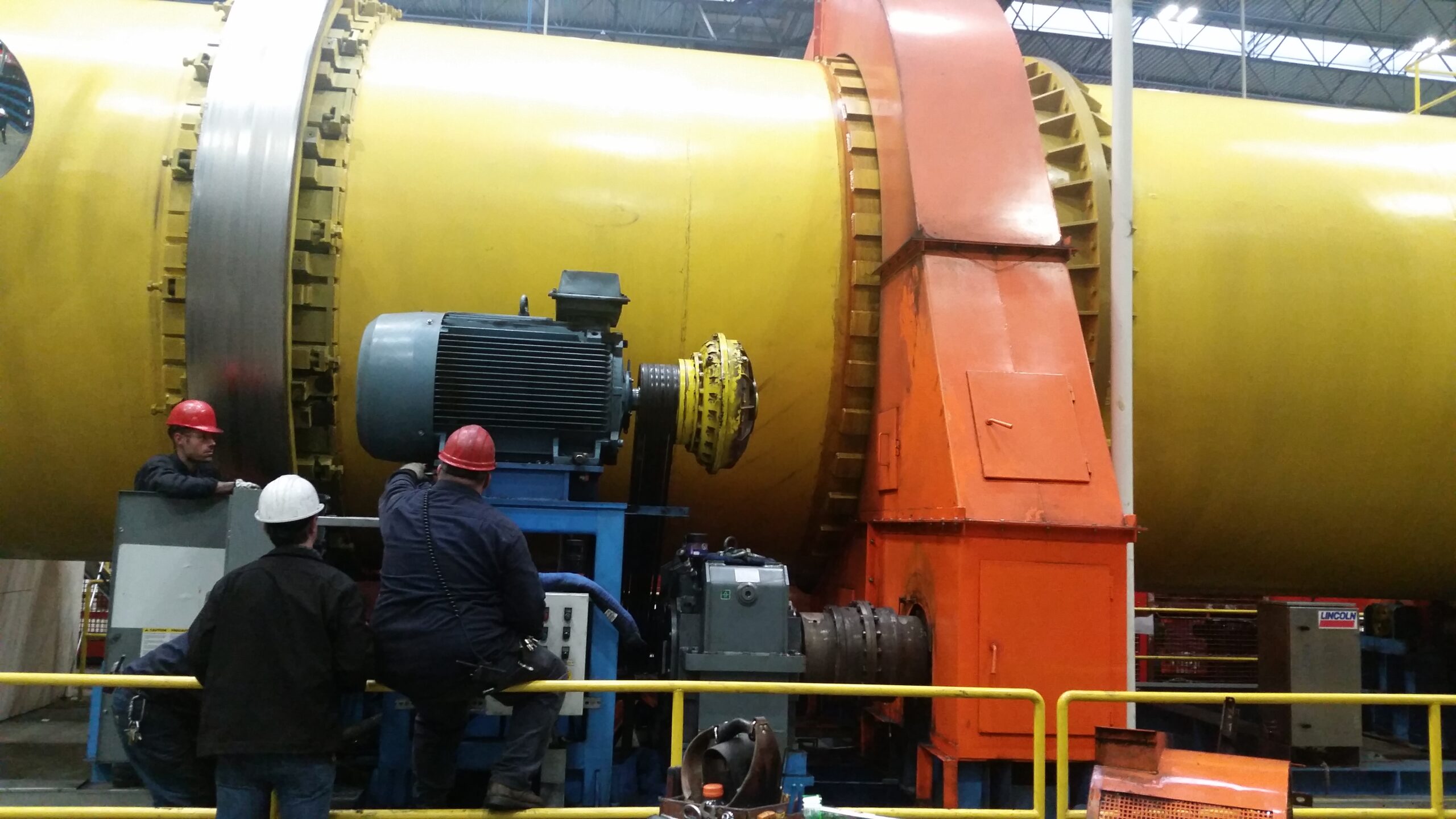
EIIP helps industrial companies transform maintenance from a reactive function into a structured engineering system, aimed at ensuring asset reliability, availability, and operational performance. Our approach combines maintenance engineering, hands-on field experience, and practical implementation to reduce unplanned downtime, improve the performance of critical assets, and sustain long-term production. We work directly on the production lines alongside maintenance teams, strengthening maintenance plans, developing technical competencies aligned with process requirements, and supporting failure analysis and management (mechanical, electrical, and automation-related), strategic spare parts management, plant startups, industrial diagnostics, continuous improvement projects, and CMMS implementation. The goal is to build measurable, sustainable maintenance systems aligned with real production needs — integrating maintenance, production, quality, engineering, and safety.
Industrial Areas We Support
01.
Reliability Engineering
Equipment design feedback through operational and lifecycle experience to improve availability, performance, and future equipment projects.
02.
Maintenance Excellence Systems
Building maintenance systems that sustain availability, safety, and efficiency
03.
Maintenance Resources & Inventory Control
Aligning people, workload, spares, and CMMS with business needs.
04.
Operational Performance & Production Stability
Reducing micro-stops, process losses, and instability on the plant floor.
05.
05. Industrial Diagnostics & Technical Support
Restoring equipment performance through field diagnostics and root cause analysis
06.
Plant Start-Up & Industrial Projects
Turning plant start-ups into stable and maintainable operations.
01
01. Reliability Engineering
This area focuses on defining industrial reliability from the asset design and continues throughout its entire operational life cycle, focusing on indicators and analyses that help define, analyze, and improve the availability and efficiency of critical equipment through data and methodologies that are born in maintenance engineering, feeding information back into design decisions oriented toward improving operation and eliminating maintenance from design (DOM), and that directly impact product quality, OEE, OLE, and other key performance indicators, generating a continuous cycle of improvement of the equipment and its total performance. This cycle not only generates new demands for the equipment manufacturer (OEM), it also drives the application of important new technologies intended to increase these industrial characteristics, technologies that competitive industrial operations are already incorporating. EIIP helps implement this type of approach: root cause analysis, FMEA, EWO, driving a new culture of reliability and continuous improvement, documentation that will serve in an important way for defining requirements for new equipment for new production lines, guaranteeing productivity and efficiency
01
02. Maintenance Excellence Systems
The excellence of a maintenance team lies in its passion for technological systems and the improvement of equipment, not for watching them fail. This passion makes perceptible the constant harmony of a machine in motion: it is not achieved with methodologies imported from a manual without being questioned, nor with activities loaded into a CMMS without deep analysis that only increase costs and administration time without results. It is built with a system designed according to the nature of the process and tailored to each operation, that integrates people with high technical knowledge, structured processes and proven methodologies, where emergency equipment stops are the exception and availability, safety and efficiency are the sustained result. EIIP accompanies this process in the field: it not only designs the maintenance model, but works embedded in the plant and hand in hand with the maintenance personnel, sharing methods and experience during the implementation, whether in plant start-ups or in the improvement of assets in operation, seeking stability in the operational reality.
03
03. Maintenance Resources & Inventory Control
Ensuring maintenance resources implies aligning the number of technicians, skill level, and plant dimension with the available time and maintenance plans, so that each intervention is executed with quality and following clear standards, without generating overtime only to “close orders”. There are no minor repairs: small tasks that are postponed end up affecting safety, quality, and line availability. Defining the spare parts warehouse as the heart of the plant —with spare parts classified by criticality, lead time, and consumption, managed in a CMMS— reduces improvisations, downtime, and immobilized capital. EIIP helps to adjust skills, workload, and spare parts strategy to build a maintenance system coherent with the business
01
04. Operational Performance & Production Stability
Operational losses frequently originate in micro-stops, equipment instability, and recurring process deviations. OEE —which integrates availability, performance, and quality— is the central indicator to measure the real performance of each line, but its value is in understanding which of the three factors is failing and why, not in reporting a weekly number. Micro-stops become normalized in the plant until nobody sees them, and process deviations generate cost before inspection detects them. The difference between a stable operation and one that lives putting out fires is in knowing how to separate equipment, method, and process losses, and attacking them with sustainable standards. EIIP works in the field together with the team, feeling the line, to measure, prioritize, and help detect and reduce those losses in a coherent way with the real operation.
01
05. Industrial Diagnostics & Technical Support
An effective industrial diagnostic integrates field inspection, signal reading, and specialized analysis tools to determine the root cause of failures in CNC equipment, PLCs, robots and automated systems, heavy and high-precision machinery. Technical support is oriented to restoring the operation quickly, stabilizing the equipment and establishing solid criteria to prevent the recurrence of failures, together with an analysis oriented to the continuous improvement of the asset, with an approach that adapts according to the nature of the process: Automotive, Foundry or Machining, both in on-site and remote interventions. EIIP brings direct maintenance experience supported by technical training and coaching methodologies accumulated over years of field work, as well as support to complete maintenance implementations in plant start-ups or new assets within the CMMS, and moves toward the integration of machine data to enable increasingly predictive analyses.
01
06. Plant Start-Up & Industrial Projects
The performance of an industrial operation depends in large part on the decisions taken during the installation and the start-up of the plant. A correct start-up is not limited to meeting a schedule: it requires integrating safety criteria, validating real capacities, preparing the administrative systems, and training the human resources who will operate and maintain the equipment. EIIP accompanies these projects from the construction phase to the real operation, coordinating with quality, production, and maintenance, and implementing the complete maintenance system — personnel, training, documentation, planning, spare parts, and CMMS — so that assets, preventive plans, and critical spares remain aligned from day one. This support also extends to expansions, new assets, and revamping projects, when partial renewal is more viable than total replacement.
Covered Systems & Tools
2.1 TPM (Total Productive Maintenance)
2.2 AM-WCM( Autonomous Maintenance)
2.3 PM-WCM (Professional Maintenance)
2.4 EEM-WCM (Early Equipment Management)
2.5 Preventive & Predictive Maintenance
2.6 Facilities Maintenance
2.7 RCM (Reliability-Centered Maintenance)
2.8 Weibull Curves
2.9 Bathtub Curve
2.10 CMMS (Computerized Maintenance Management System)
2.11 MTBF (Mean Time Between Failures)
2.12 MTTR (Mean Time To Repair)
2.13 OEE (Overall Equipment Effectiveness)
2.14 OLE (Overall Line Effectiveness)
2.15 Mechanical Failure Analysis
2.16 Electrical Failure Analysis
2.17 Field Diagnosis of CNC Equipment
2.18 Spare Parts Management and Spare Parts Warehouse
2.19 Maintenance Backlog Management
2.20 Plant Installation and Startup
2.21 FAT (Factory Acceptance Test)
2.22 Production Line Commissioning
2.23 Plant Revamping and Reengineering
2.24 Corrective Maintenance Management
2.25 Micro-Stoppage Management
2.26 Industrial Failure Analysis